DoktorClub
About Us
For Business
Offers
News
Congresses
Academy
LongeviTurk
AI Health News
Contact
Sign InTry DOKGPT
DoktorClub
Sağlık Bilgisi.
Hekim Güveni.

Health guides

  • All health news

Platform

  • DOKGPT
  • TUS Question Bank
  • Calculators
  • Academy
  • Digital Medical School

Community

  • Physician Network
  • Case Discussions
  • News
  • AI Health News
  • AI Health Briefings
  • AI Health Tracker
  • Congresses
  • Doktorclub Awards
  • Academy
  • Live Broadcasts
  • Health Awareness Calendar (TR)

Resources

  • Magazines
  • TUS Blog
  • Offers
  • Leaderboard
  • VIP

Company

  • About Us
  • Corporate Solutions
  • Press Center
  • Medical Aesthetics
  • Contact
  • Privacy & Data Protection

Membership

  • Physician Sign-up
  • Student Sign-up
  • Academic Sign-up
  • Sign In
DoktorClub© 2026 DoktorClub. All rights reserved.
InstagramLinkedIn
Home › Health News › Science News

Science News

New Research Reveals the Vital Role of the Innate Immune System in Pancreatic Cancer

A new scientific study in cancer biology and immunology has revealed that, in pancreatic ductal adenocarcinoma (PDAC), one of the deadliest types of cancer, the body's first line of defense, the "innate immune…

9 October 2026 · 1 min read · DoktorClub Editorial Board

Translated from the Turkish original by DoktorClub. The Turkish version is the reference text; this English translation has not been separately reviewed by a physician. Read the Turkish original.
New Research Reveals the Vital Role of the Innate Immune System in Pancreatic Cancer
A new scientific study in cancer biology and immunology has brought to light the critical role played by the body's first line of defense, the "innate immune system," in pancreatic ductal adenocarcinoma (PDAC), one of the deadliest types of cancer. According to the published study, innate immune cells located in the pancreatic tumor microenvironment trigger biological mechanisms that help the tumor escape the immune system and spread rapidly.


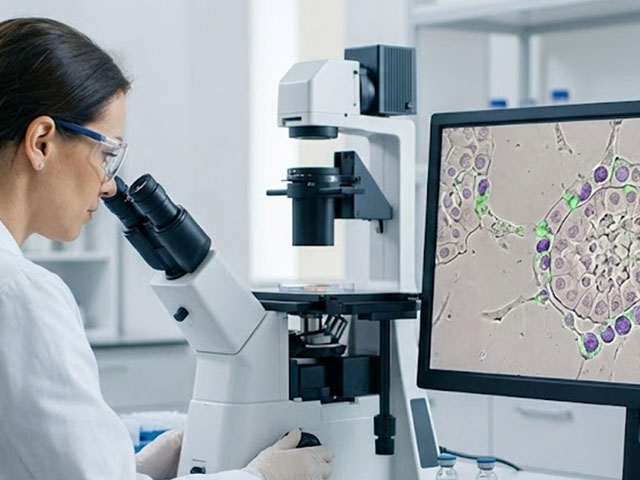
As part of the research, pancreatic tumor tissues and cellular interactions were examined in detail using advanced single-cell sequencing and immunofluorescence techniques. The findings showed that cells such as macrophages and neutrophils, which are key components of the innate immune response, are suppressed by signals secreted by cancer cells and over time take on a "pro-tumorigenic" identity that promotes tumor growth. This explains why conventional immunotherapies fall short in pancreatic cancer.


Oncology specialists and researchers point out that the dense stroma (connective tissue) layer surrounding pancreatic cancer and the suppressed immune microenvironment form the biggest barrier to treatment. Understanding the contribution of innate immune cells to the formation of this resistant environment makes it possible to go beyond standard treatments focused on T cells and develop entirely new strategies that target the immune system's first line.


The researchers state that the results lay the groundwork for groundbreaking next-generation combination therapies in pancreatic cancer treatment. It is anticipated that molecularly targeted drugs that reactivate the anti-tumor functions of innate immune cells, given together with existing chemotherapies and immunotherapies, could bring meaningful increases in patient survival rates and in response to treatment.


Source: www.news-medical.net

More health news

Science News

Body Fat Distribution Found to Influence Hunger Hormones More Than Daily Diet

9 October 2026
Science News

Certain Gut Bacteria Linked to Better Clinical Outcomes in Heart Failure Patients

8 October 2026
Science News

Ideal Sleep Duration Varies From Person to Person

8 October 2026
Science News

Under a new definition of obesity, half of overweight US adults have "clinical obesity"

6 October 2026