DoktorClub
About Us
For Business
Offers
News
Congresses
Academy
LongeviTurk
AI Health News
Contact
Sign InTry DOKGPT
DoktorClub
Sağlık Bilgisi.
Hekim Güveni.

Health guides

  • All health news

Platform

  • DOKGPT
  • TUS Question Bank
  • Calculators
  • Academy
  • Digital Medical School

Community

  • Physician Network
  • Case Discussions
  • News
  • AI Health News
  • AI Health Briefings
  • AI Health Tracker
  • Congresses
  • Doktorclub Awards
  • Academy
  • Live Broadcasts
  • Health Awareness Calendar (TR)

Resources

  • Magazines
  • TUS Blog
  • Offers
  • Leaderboard
  • VIP

Company

  • About Us
  • Corporate Solutions
  • Press Center
  • Medical Aesthetics
  • Contact
  • Privacy & Data Protection

Membership

  • Physician Sign-up
  • Student Sign-up
  • Academic Sign-up
  • Sign In
DoktorClub© 2026 DoktorClub. All rights reserved.
InstagramLinkedIn
Home › Health News › Science News

Science News

Body Fat Distribution Found to Influence Hunger Hormones More Than Daily Diet

A new scientific study in the field of metabolism and nutritional biology has shown that the hormones governing feelings of hunger and fullness are directly related not only to what is eaten each day but also to where fat is stored in the body…

9 October 2026 · Updated 9 October 2026 · 1 min read · DoktorClub Editorial Board

Translated from the Turkish original by DoktorClub. The Turkish version is the reference text; this English translation has not been separately reviewed by a physician. Read the Turkish original.
Body Fat Distribution Found to Influence Hunger Hormones More Than Daily Diet
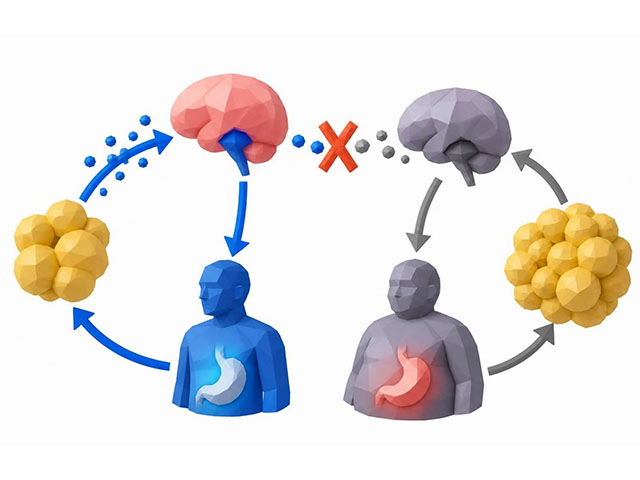
A new scientific study in the field of metabolism and nutritional biology has shown that the hormones governing feelings of hunger and fullness are directly related not only to what is eaten each day but also to where fat is stored in the body. According to the published study, the pattern of body fat distribution—particularly abdominal (visceral) fat versus fat under the skin (subcutaneous fat)—regulates levels of the hunger hormone ghrelin and the satiety hormone leptin far more strongly than daily dietary components.


As part of the study, metabolic data and blood hormone levels of participants with different body types and fat distribution profiles were examined in detail. The findings showed that fat tissue concentrated in the abdominal region is highly metabolically active and disrupts, at the cellular level, the hunger and satiety signals sent to the brain. In individuals with high abdominal (visceral) fat, resistance to satiety signals developed and feelings of hunger remained persistently high, even when daily calorie or nutrient intake was controlled.


Endocrinology and obesity specialists point out that fat tissue is not merely a passive energy storage organ but also functions like a complex hormone-secreting gland. Adipokines and inflammatory molecules secreted by fat cells in different regions of the body directly affect the appetite centers in the hypothalamus. This explains why people following the same eating plan feel different levels of hunger and achieve different results in weight management.


Scientists emphasize that the results prove the need to go beyond standard diet lists in weight control and obesity treatment. Personalized metabolic interventions designed around an individual's body composition and fat distribution map are expected to deliver much more successful results in controlling appetite and in long-term weight management.


Source: www.news-medical.net

More health news

Science News

New Research Reveals the Vital Role of the Innate Immune System in Pancreatic Cancer

9 October 2026
Science News

Certain Gut Bacteria Linked to Better Clinical Outcomes in Heart Failure Patients

8 October 2026
Science News

Ideal Sleep Duration Varies From Person to Person

8 October 2026
Science News

Under a new definition of obesity, half of overweight US adults have "clinical obesity"

6 October 2026