Guides
Vitamin B6 Excess: Neuropathy Risk and Upper Limit
According to EFSA 2023, the upper limit for B6 in adults is 12 mg per day. Long-term high-dose B6 can lead to neuropathy causing numbness in the hands and feet.
Translated from the Turkish original by DoktorClub. The Turkish version is the reference text; this English translation has not been separately reviewed by a physician. Read the Turkish original.

Key takeaway
Vitamin B6 (pyridoxine) is safe when obtained from food; the problem arises when high doses are taken from supplements over a long period. According to EFSA's 2023 assessment, the upper limit for adults is 12 mg per day. The most important known harm of excess B6 is peripheral neuropathy, which causes numbness, tingling and burning in the hands and feet. When magnesium-B6, B complex and multivitamins are used together, the total amount can rise without being noticed.
Short Answer
Vitamin B6 (pyridoxine) is safe when obtained from food; the problem arises when high doses are taken from supplements over a long period. According to EFSA's 2023 assessment, the upper limit for adults is 12 mg per day. The most important known harm of excess B6 is peripheral neuropathy, which causes numbness, tingling and burning in the hands and feet. When magnesium-B6, B complex and multivitamins are used together, the total amount can rise without being noticed.
What does it do?
Vitamin B6 is a coenzyme that helps more than 100 enzyme reactions in the body. Most of these reactions relate to protein metabolism. According to the NIH Office of Dietary Supplements, B6 plays a role in making neurotransmitters in the nervous system, in hemoglobin formation and in immune function.
Therefore, the correct wording used for B6 is: "contributes to normal protein metabolism and to the normal function of the nervous system." A B6 supplement does not treat a disease. If there is a deficiency, correcting it is the physician's job.
Daily requirement
Requirements vary by age, sex, pregnancy and breastfeeding status. The values below are for healthy people; they do not show requirements in disease.
| Group | Recommended daily B6 (TÜBER 2022) | US value (NIH ODS, IOM) |
|---|---|---|
| Adult man | 1.7 mg | Ages 19–50: 1.3 mg; age 51 and over: 1.7 mg |
| Adult woman | 1.6 mg | Ages 19–50: 1.3 mg; age 51 and over: 1.5 mg |
| Pregnant | 1.8 mg | 1.9 mg |
| Breastfeeding | 1.7 mg | 2.0 mg |
The values used as the basis in Türkiye are those in TÜBER 2022. The US values are for comparison only.
Note: the requirement is around 1–2 mg. Some supplements may contain several times this amount; check the amount on the label.
Which foods contain it?
The Türkiye Nutrition Guide (TÜBER 2022) lists the following as sources of B6:
- Eggs
- Chicken and fish
- Whole grains and dried legumes
- Nuts
- Organ meats
A healthy adult with a varied diet usually meets their B6 needs from food. Neuropathy is not expected to develop from B6 in food. EFSA also states that the problem lies with people who regularly use high-dose supplements.
Who is at risk of deficiency?
According to NIH, B6 deficiency is more common in the following groups:
- People with impaired kidney function, especially dialysis patients
- People with autoimmune diseases such as rheumatoid arthritis
- People with celiac disease or inflammatory bowel disease
- People with alcohol dependence
According to TÜBER 2022, deficiency can cause anemia, confusion, skin lesions, nausea, restlessness and depression. These symptoms also occur in many other conditions. On their own, they do not indicate B6 deficiency.
Which test, and how is it read?
B6 status is assessed by measuring plasma pyridoxal 5'-phosphate (PLP) in the blood. According to NIH, a PLP value above 20 nmol/L indicates an adequate level. Always read the result together with your own laboratory's reference range.
The PLP test is not a routine screening test. Your physician usually orders it in the following situations:
- If there is unexplained numbness or tingling
- If you have been using a B6-containing supplement for a long time
- If there is kidney disease or a malabsorption disorder
B6 excess is not the only possibility with numbness. B12 deficiency and diabetes cause similar symptoms. Therefore, your physician will most likely also order B12, blood sugar and thyroid tests. For details, see the B12 deficiency guide.
When is a supplement needed, and when is it not?
A healthy adult with a varied diet does not routinely need a B6 supplement. A supplement usually comes into consideration when a deficiency is detected or when a drug that causes deficiency is being used. This decision is made by the physician.
Do not take B6 on your own in these situations:
- If it was recommended as a "nerve strengthener" or "energy booster"
- If you are already using magnesium-B6 or B complex
- If you have complaints of numbness, tingling or burning
The last point is important. According to TGA, the symptoms of B6 excess resemble those of deficiency. Taking B6 for numbness can make the picture worse if the problem is excess.
Upper limit and excess
According to the EFSA 2023 decision, the upper limits are as follows:
| Age group | Daily upper limit (UL) | Source |
|---|---|---|
| Adult (including pregnant and breastfeeding women) | 12 mg | EFSA 2023 |
| Ages 15–17 | 10.7 mg | EFSA 2023 |
| Ages 11–14 | 8.6 mg | EFSA 2023 |
| Ages 7–10 | 6.1 mg | EFSA 2023 |
| Ages 1–3 / Ages 4–6 | 3.2 mg / 4.5 mg | EFSA 2023 |
How was this limit determined? EFSA could not determine with certainty from human data the dose at which neuropathy begins. It took 50 mg per day from a case-control study as the starting point. Taking into account that symptoms start later as the dose decreases, it divided this value by 4; the result was 12.5 mg. This was evaluated together with 11.7 mg calculated from an animal study. The adult upper limit was set at 12 mg per day.
What do other authorities say? In the US, the upper limit set by the IOM is 100 mg per day; NIH still gives this limit as the valid value. NIH reports that 1–6 grams of B6 per day caused severe and progressive sensory neuropathy within 12–40 months. Australia's medicines regulator, the TGA, had received 250 neuropathy reports associated with B6-containing products by October 31, 2025. According to TGA, the risk is greatest at high doses but cannot be ruled out below 50 mg per day either. In Australia, products with a daily dose above 10 mg have carried a neuropathy warning since 2022.
Symptoms: Numbness, tingling, burning and imbalance in the hands and feet are usually seen. According to NIH, if the supplement is stopped when symptoms first appear, they mostly stop. TGA, however, states that the damage can progress as diagnosis is delayed and use continues.
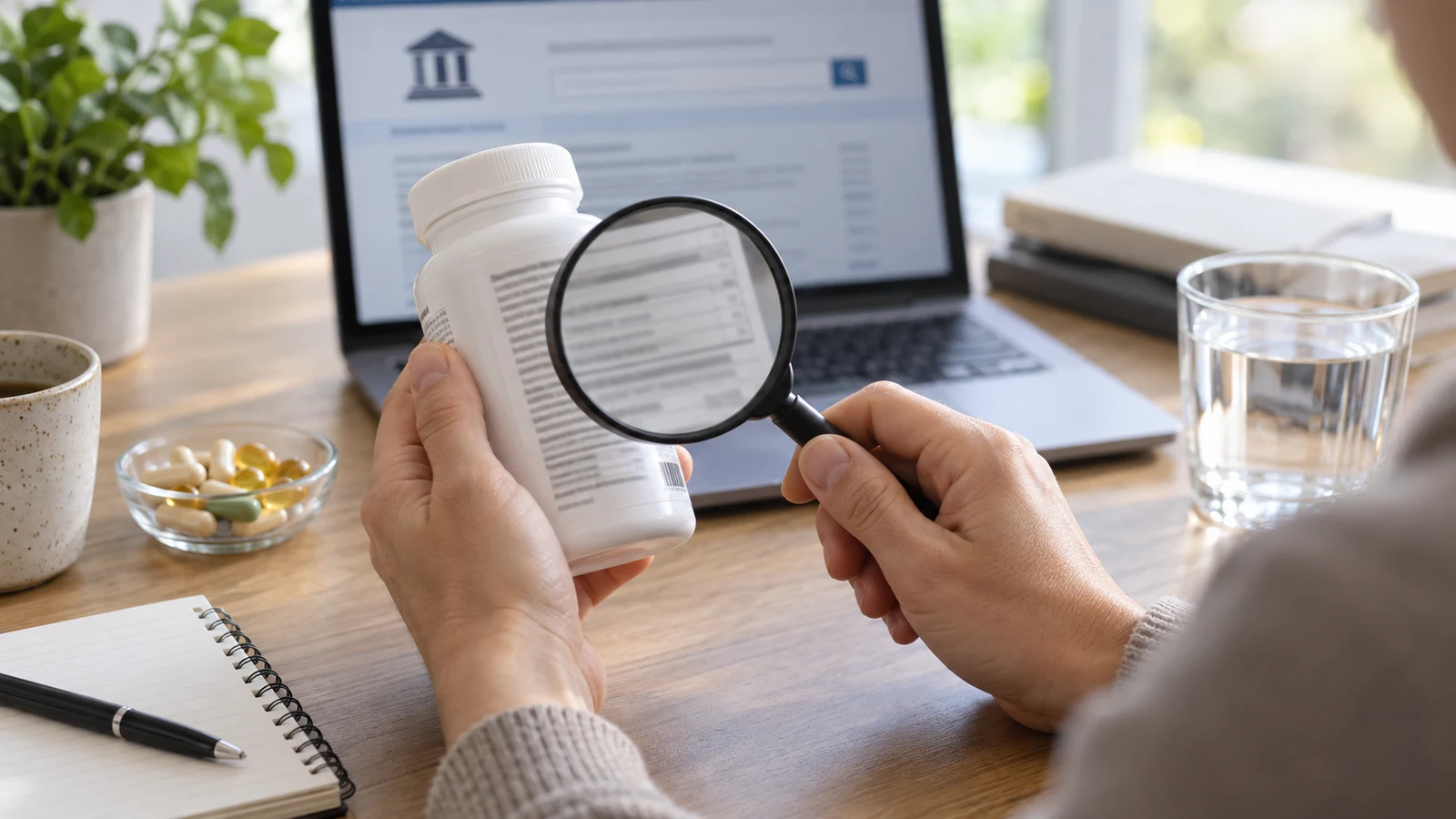
The hidden total trap: B6 may not come from a single product. TGA emphasizes that B6 is also found in multivitamin, B complex, magnesium and zinc products. For example, a magnesium-B6 product, a B complex and a multivitamin may be used together. In this case, even if the amount in each looks small, the total can exceed 12 mg. Add up the "B6" or "pyridoxine" line on every label.
Drug and lab test interactions
According to NIH, some drugs can lower B6 levels:
- Cycloserine (a tuberculosis drug)
- Some seizure drugs: phenytoin, carbamazepine, valproic acid
- Theophylline (an asthma and COPD drug)
If you use these drugs, do not start a B6 supplement on your own. Tell your physician or pharmacist about your supplements. Do not stop or change your medication yourself.
When you see a doctor for a numbness complaint, report all the supplements you use. This can prevent unnecessary tests and wrong diagnoses.
In Türkiye
- Different upper limits: The Turkish Ministry of Health's Türkiye Nutrition Guide 2022 (TÜBER) gives the adult upper limit as 25 mg per day. The limit set by EFSA in 2023, however, is 12 mg. When evaluating labels, use the newer and lower EFSA limit as the basis.
- Health claim rules: Health claims on food supplements are subject to the regulation of TİTCK (Turkish Medicines and Medical Devices Agency) dated April 20, 2023 (Official Gazette no. 32169). The regulation defines a product presented with the claim that it treats or prevents a disease as a "medicinal product for human use." Therefore, a supplement cannot be promoted as "treating neuropathy."
- Checking approval: The Ministry of Agriculture and Forestry approves each food supplement individually. You can check approved products in the "Onaylı Takviye Edici Gıdalar Listesi" (List of Approved Food Supplements) in GGBS. You can report a product not on the list to the Alo 174 Food Line.
- Read the label: B6 is frequently found in magnesium and B complex products. Add up the daily dose on the label and the amount in your other products. For details, see the how to read a supplement label guide.
Which doctor should you see?
- First contact: Family physician or Internal Medicine.
- If numbness, burning or imbalance persists: Neurology. A nerve conduction test (EMG) is ordered if needed.
- If you have diabetes: Endocrinology; the relationship of the neuropathy to blood sugar is also evaluated.
- Bring with you: The boxes of all supplements you use, your medication list and your previous B12, blood sugar and PLP results.
When should you seek emergency care?
- If a child has swallowed a product containing iron, call 112 (the emergency number in Türkiye) without waiting for symptoms. If they swallowed another supplement, call 114, the National Poison Information Center; if there is drowsiness, vomiting, difficulty breathing or a seizure, call 112.
- Weakness in the legs increasing over hours or days, inability to walk, or loss of bladder or bowel control: go to the emergency department without waiting. If there is difficulty breathing, call 112.
- Facial drooping, sudden arm weakness, speech disturbance: this may be a stroke; call 112.
- Frequent falls or marked loss of balance together with numbness: see a physician or go to the emergency department the same day.
Related guides
- Vitamin and Mineral Guide
- Supplement checker
- Magnesium supplements: citrate, glycinate, threonate
- Does everyone need a multivitamin?
- When should numbness and tingling be taken seriously?
- Supplement–drug interactions
What changed? (October 2026)
- The adult upper limit was given as 12 mg per day according to the EFSA 2023 decision. The difference from the 25 mg limit in TÜBER 2022 was explained.
- The daily requirement table and food sources were updated according to TÜBER 2022; it was noted that the US upper limit is still in effect.
- Australian TGA's November 2025 decision and its February 2026 safety update (neuropathy reports, label warning above 10 mg) were added.
Sources
- Turkish Ministry of Health (Sağlık Bakanlığı). Türkiye Beslenme Rehberi (TÜBER) 2022. https://hsgm.saglik.gov.tr/depo/birimler/saglikli-beslenme-ve-hareketli-hayat-db/Dokumanlar/Rehberler/Turkiye_Beslenme_Rehber_TUBER_2022_min.pdf (accessed October 4, 2026)
- TİTCK. Gıda ve Takviye Edici Gıdalarda Sağlık Beyanı Kullanımı Hakkında Yönetmelik. Official Gazette (Resmî Gazete) 20.04.2023, no. 32169. https://www.resmigazete.gov.tr/eskiler/2023/04/20230420-5.htm (accessed October 4, 2026)
- Turkish Ministry of Agriculture and Forestry (T.C. Tarım ve Orman Bakanlığı), Güvenilir Gıda. Bir takviye edici gıdanın onaylı olup olmadığını nereden öğrenebiliriz? February 10, 2026. https://guvenilirgida.tarimorman.gov.tr/Haber/Detay/17314 (accessed October 4, 2026)
- EFSA NDA Panel. Scientific opinion on the tolerable upper intake level for vitamin B6. EFSA Journal 2023;21(5):8006. https://doi.org/10.2903/j.efsa.2023.8006 (accessed October 4, 2026)
- EFSA. Overview on Tolerable Upper Intake Levels as derived by the SCF and the EFSA NDA Panel. Version 11, August 2025. https://www.efsa.europa.eu/sites/default/files/2024-05/ul-summary-report.pdf (accessed October 4, 2026)
- NIH Office of Dietary Supplements. Vitamin B6: Fact Sheet for Health Professionals. Updated June 16, 2023. https://ods.od.nih.gov/factsheets/VitaminB6-HealthProfessional/ (accessed October 4, 2026)
- Therapeutic Goods Administration (TGA). Medicines containing vitamin B6 (pyridoxine, pyridoxal or pyridoxamine). Medicine Safety Update, February 19, 2026; updated April 7, 2026. https://www.tga.gov.au/news/safety-updates/medicines-containing-vitamin-b6-pyridoxine-pyridoxal-or-pyridoxamine (accessed October 4, 2026)
Frequently asked questions
Isn't excess vitamin B6 excreted in urine?
B6 is a water-soluble vitamin. However, this does not mean that excess is harmless. EFSA firmly accepts that long-term high intake leads to peripheral neuropathy. That is why it set a low upper limit.
Can magnesium B6 be used every day?
It depends on the amount of B6 in the product and your other supplements. Add up the B6 amount in each product. If the total exceeds 12 mg per day in an adult, consult your physician or pharmacist. Also evaluate together whether you need magnesium at all.
Does B6 neuropathy go away?
If noticed early, it often stops. According to NIH, if the supplement is stopped when symptoms first appear, they usually stop. According to TGA, however, the damage can progress as use continues. If symptoms persist, see a neurologist; another cause should also be investigated.
How is high B6 detected in a lab test?
The PLP level can be measured in the blood. A high PLP shows that too much B6 has been taken recently. However, it does not show the degree of nerve damage. The physician makes the diagnosis based on symptoms, examination and, if needed, EMG.
Can B6 be used during pregnancy?
According to TÜBER 2022, the daily requirement in pregnancy is 1.8 mg. EFSA's adult upper limit (12 mg) also applies to pregnant and breastfeeding women. If you are going to use a drug or supplement for nausea in pregnancy, consult your obstetrician.
Source: Sağlık Bakanlığı. Türkiye Beslenme Rehberi (TÜBER) 2022.