Longevity and Ageing
When to Take Iron: Empty Stomach or With Food? How Long Before Tea?
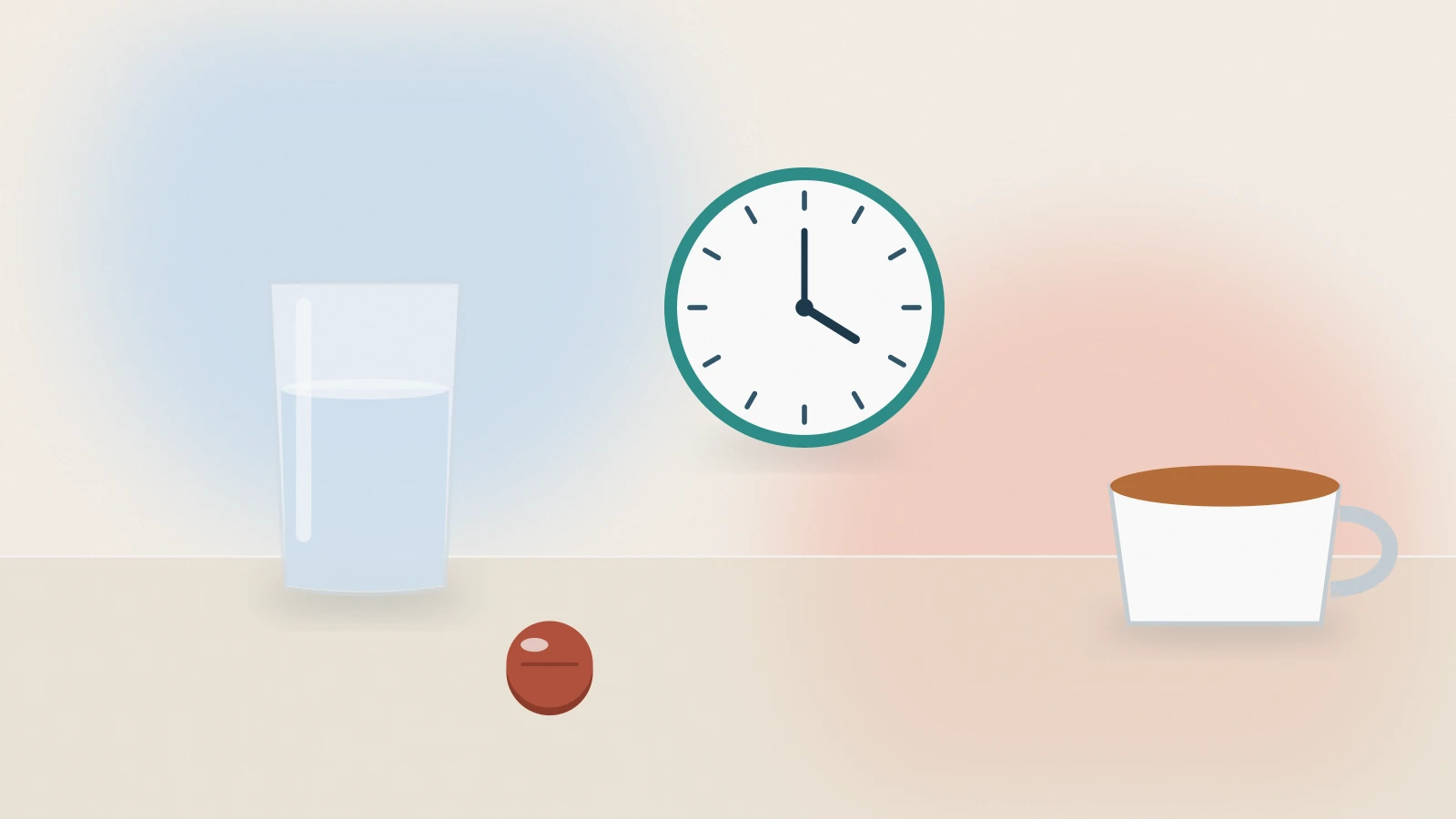
Iron medicine is taken with water on an empty stomach, 1.5–2 hours after a meal. Drink tea at least 1, if possible 2 hours later. If it makes you nauseous, tell your doctor.
Translated from the Turkish original by Doktorclub. The Turkish version is the reference text; this English translation has not been separately reviewed by a physician. Read the Turkish original.
Key takeaway
According to the 2025 guideline of the Turkish Society of Hematology (THD), iron medicine is absorbed better on an empty stomach. This usually means 1.5–2 hours after a meal. If nausea or constipation occurs, your doctor may advise you to take iron with food or to use it every other day. Tea, coffee, milk and calcium reduce absorption; they should not be taken at the same time as iron. Do not start iron on your own without a deficiency confirmed by a blood test. The iron that the Ministry of Health of Türkiye gives to pregnant women and babies through its programme is outside this rule.
Short Answer
Iron medicine is absorbed better on an empty stomach, 1.5–2 hours after a meal. If it upsets your stomach, the doctor may advise you to take it with food or every other day.
This rule is based on the 2025 guideline of the Turkish Society of Hematology (THD). According to the British Society of Gastroenterology (BSG) 2021, taking iron with food can reduce absorption by up to 75%. Tea, coffee, milk and calcium also reduce absorption. But not taking the medicine at all is worse than taking it with food. If you have stomach complaints, do not stop the medicine; tell your doctor.
Who needs iron and who does not?
Do not start iron without a blood test. Tiredness is also seen in thyroid problems, B12 deficiency and lack of sleep. A complete blood count and ferritin are needed first. What the thresholds mean is explained in the ferritin guide.
| Your situation | Iron? | Note |
|---|---|---|
| Iron deficiency anemia shown by a blood test | Yes, with a doctor's plan | The cause also needs to be investigated |
| Low ferritin, normal hemoglobin | The doctor decides according to the symptoms | THD: in this group a single dose every other day is effective |
| Pregnant, no anemia | Through the Ministry programme, from week 16 | Follow your family physician's plan |
| Healthy baby aged 4–12 months | Through the Ministry programme | The "Demir Gibi Türkiye" ("Iron-Strong Türkiye") programme |
| Man or postmenopausal woman with deficiency | Yes, but it is not enough on its own | Bleeding in the digestive system should be investigated |
| Thalassemia carrier, normal ferritin | No | THD: carrier status needs no treatment |
| High ferritin and saturation | No, it may be harmful | See the hemochromatosis guide |
| I am tired, no blood test | Blood test first | The symptoms are not specific to iron |
If a thalassemia carrier also has iron deficiency, that deficiency is treated. The diagnosis and causes of the disease are in the iron deficiency anemia guide.
Call right away: emergencies specific to iron
- If a child has swallowed iron tablets or a vitamin containing iron: Even if the amount looks small, call 112 (in Türkiye) or your local emergency number without waiting for symptoms. For advice you can also call the poison helpline (114 in Türkiye; National Poison Information Center, UZEM). According to the THD, an amount such as 5 tablets can cause poisoning. Symptoms can start within minutes or appear late. Take the box with you.
- Tar-like sticky, foul-smelling black stool or vomit that looks like coffee grounds: Go to the emergency department immediately. Dark stool caused by iron, on the other hand, is an expected effect.
- Fainting, chest pain, shortness of breath at rest: Call 112 (in Türkiye) or your local emergency number.
Keep iron tablets out of the reach of children, preferably in a locked place. According to the NIH, accidental ingestion of iron-containing products is one of the leading causes of fatal poisoning in children under 6.
Empty stomach or with food: rules for daily use
| Question | What is done? | Source |
|---|---|---|
| When? | On an empty stomach; 1.5–2 hours after a meal | THD 2025 |
| If it makes you nauseous? | Take it with a meal or with something light; tell your doctor | THD 2025 |
| Tea, coffee? | Swallow the medicine with water; drink tea at least 1, if possible 2 hours later | BSG 2021; NHS |
| Milk, yogurt, calcium? | Do not take them at the same time as the medicine | THD 2025 |
| How is it swallowed? | With water, whole; do not suck or chew | NHS |
| I forgot a dose? | Take it when you remember; if the next dose is close, skip it; do not take a double dose | NHS |
In Türkiye breakfast most often comes with tea. Taking iron with tea at breakfast is an easy mistake to make. According to the THD, the tannin (tannate) in tea reduces the absorption of iron.
Which form? According to the THD, medicines containing ferric polymaltose complex can also be taken with a meal or on a full stomach. This form can be chosen for people who cannot tolerate ferrous salts. But do not say "it can be taken on a full stomach, so I will always take this one". In a meta-analysis in children, ferric polymaltose raised hemoglobin about 0.8 g/dL less than ferrous sulfate; no difference was found in gastrointestinal side effects (Mohd Rosli 2021). In adults the evidence is more limited. Change the form together with your doctor. Extended-release tablets upset the stomach less; but according to the THD they may be less effective because they are poorly absorbed. Read which form you are using from the active ingredient on the box.
Example day (general pattern): Thyroid medicine on waking in the morning. Breakfast, tea. Iron with water 1.5–2 hours after lunch. Tea and milk at least 1 hour later. Calcium or stomach medicine in the evening. Plan your own times with your doctor or pharmacist.
Can it be taken at night before bed?
If the stomach is empty, taking it in the evening or before bed is not forbidden. But iron taken in the morning may be absorbed better. The hormone hepcidin, which reduces the absorption of iron, rises during the day. In a study of 34 women with iron deficiency, hepcidin was higher in the afternoon and the absorption of iron was 37% lower than in the morning. This difference was not statistically conclusive (von Siebenthal 2023). We could not find a study that directly examined iron taken before bed.
In the same study coffee reduced the absorption of iron by 54%, and breakfast with coffee by 66%. For this reason, more than the time of day, what matters is taking iron away from meals, tea and coffee:
- If your morning is free: Before breakfast and coffee, with water. If you take thyroid medicine, this order does not fit; for the 4-hour gap rule see the example day above.
- If the morning does not work: During the day or in the evening, 1.5–2 hours after the last meal and away from tea.
- If you feel nauseous in the evening: Instead of changing the time, tell your doctor; they may change the form or the frequency.
Why is the advice you hear different?
Sources can seem to contradict each other. Most of the difference comes from the choice between absorption and stomach comfort:
| Topic | THD 2025 | BSG 2021 | NHS |
|---|---|---|---|
| With food? | On an empty stomach; with food if there are side effects | Food reduces absorption by up to 75% | 30 minutes before or 2 hours after a meal; with food if it upsets the stomach |
| Vitamin C, orange juice? | The adult section says it increases absorption; the children's section says no benefit has been shown | Not recommended | Orange juice may help |
| Duration after hemoglobin has recovered | 3 more months | About 3 more months | 3–6 more months after recovery |
The NHS's own two pages also differ. The medicine page recommends an empty stomach. The anemia page, on the other hand, recommends taking it with or right after food to reduce side effects. Both describe the same balance: better absorption or a more comfortable stomach? There is a similar difference for duration: the MSD Manual recommends about 6 months after blood values have recovered. Your doctor sets the duration according to your follow-up blood tests.
The last word on vitamin C: BSG 2021, based on a large randomized trial, states that vitamin C neither improved blood values nor reduced side effects. Having lemon in your food is not a problem. A separate vitamin C tablet, however, is usually not needed. Details are in the vitamin C article.
How much is the dose? The ranges given by guidelines
The values below are guideline ranges; they are not a dose specific to you. Your doctor sets the dose.
| Situation | Range (elemental iron) | Source |
|---|---|---|
| Iron deficiency anemia in adults | Usually 180 mg a day; 100–200 mg | THD 2025 |
| Starting dose in adults (UK) | A single dose of 50–100 mg a day | BSG 2021 |
| People in their eighties, intolerance | 15 mg a day may be effective | THD 2025; BSG 2021 |
| Pregnant woman without anemia | 15–30 mg a day | THD 2025 |
| Ministry pregnancy programme | 40–60 mg a day; from week 16 to the 3rd month after delivery | Türkiye Dietary Guidelines (TÜBER) 2022 |
| Ministry infant programme | 4–12 months, term baby without anemia, 10 mg a day | TÜBER 2022 |
| Treatment in children | 3–6 mg/kg/day; in adolescents 65–130 mg once a day | THD 2025 |
The number on the label may be the weight of the salt. According to BSG 2021, 200 mg of ferrous sulfate contains 65 mg, 210 mg of ferrous fumarate 69 mg and 300 mg of ferrous gluconate 37 mg of elemental iron. The comparison is made on elemental iron; see the supplement label guide.
For products used on one's own, EFSA 2024 could not set an upper limit; it considered 40 mg a day a safe level of intake in adults. TÜBER 2022 gives 45 mg/day as the upper level in adults. These values do not apply to treatment under a doctor's supervision.
Every day or every other day?
When iron is taken, the liver releases a hormone called hepcidin. Hepcidin reduces the absorption of the next dose. According to BSG 2021, 60 mg of iron reduces absorption by 35–45% over the following 24 hours. In the Stoffel 2017 study in 40 women with low stores, absorption of iron given every other day was 21.8% and of iron given every day 16.3%.
According to THD 2025, in deficiency without anemia a single dose every other day is effective. In anemia, however, its superiority over daily treatment could not be shown; but side effects decreased. In a study cited by the BSG, 60 mg twice a day raised it faster than 120 mg every other day. After the same total dose the rise was similar, and nausea was less with every-other-day dosing. If fast recovery is needed, the doctor may choose a daily dose.
When does it work? Timeline
| When? | What is expected? | Source |
|---|---|---|
| First days | There may be stomach complaints. Starting with a low dose and increasing over 4–5 days helps. | THD 2025 |
| Weeks 2–4 | Hemoglobin rises by 1–2 g/dL. A follow-up blood count is ordered. | THD 2025 |
| Day 28 | A more suitable time for the check on an every-other-day schedule. | BSG 2021 |
| Months 2–4 | If the cause has been corrected, the anemia resolves. | THD 2025 |
| Once hemoglobin has recovered | About 3 more months to fill the stores. | THD 2025; BSG 2021 |
| ≥8 days after treatment has ended | Iron tests are done. | THD 2025 |
According to the THD, filling the stores takes longer at an advanced age. If the need continues, as with heavy periods, the doctor may recommend continuing with a low dose after the stores are full.
If there is no response: THD 2025 lists these: wrong diagnosis, an accompanying disease, the medicine not being taken regularly, an unsuitable dose or medicine, impaired absorption, ongoing bleeding. Do not increase the dose yourself. The doctor may consider intravenous iron.
Side effects and what to do
| Side effect | What is done? |
|---|---|
| Nausea, heartburn | Taking it with food, lowering the dose or switching to every other day is discussed with the doctor. |
| Constipation or diarrhea | Common. If it continues, tell your doctor or pharmacist. |
| Dark, black stool | It is an expected effect. If it is tar-like and sticky and smells foul, it is an emergency. |
| Staining of the teeth in children | THD: give the drops at the back of the tongue, rinse the mouth, brush the teeth. |
According to the THD, intolerance to oral iron is very common. The medicine not being taken regularly is one of the causes of non-response listed by the THD. Tell your doctor before stopping.
Who should be careful?
- People taking thyroid medicine: According to the Society of Endocrinology and Metabolism of Türkiye (TEMD) 2025, a gap of at least 4 hours is left between levothyroxine and iron.
- People taking other medicines: According to the THD, iron reduces the absorption of bisphosphonates, tetracycline and quinolone group antibiotics, levodopa, methyldopa and penicillamine. A gap of at least 2 hours is recommended. Antacids, stomach acid medicines, calcium, magnesium and zinc also reduce the absorption of iron. The THD does not recommend giving iron and zinc together. To check, use the drug interaction tool.
- Women who menstruate: According to TÜBER 2022, the requirement is 16 mg/day before menopause and 11 mg/day after; in men 11 mg/day. If periods are heavy, the cause should also be investigated.
- Men and postmenopausal women: According to BSG 2021, about a third of those with iron deficiency anemia in this group have an underlying disease.
- Vegetarians: According to the NIH, the iron requirement of people who do not eat meat, poultry and seafood is almost twice as high.
- People who have had bariatric surgery: Absorption decreases; see the guide to deficiencies after surgery.
Iron preparations dispensed in pharmacies as medicines are medicines. Iron-containing food supplements, on the other hand, are approved by the Ministry of Agriculture and Forestry. If you are using an iron-containing supplement, you can look up the product with the supplement check tool.
What has changed?
- November 12, 2026: It was stated in the source list that the iron assessment in the EFSA summary report dates from 2024.
- November 6, 2026: The section "Can it be taken at night before bed?" was added; the study comparing morning and afternoon absorption and the effect of coffee.
- October 24, 2026: The "Who needs it and who does not?" decision table, the treatment timeline and the comparison of THD, BSG, NHS and MSD recommendations were added; the efficacy evidence for ferric polymaltose was added. The mistake of taking it with tea and the side effects table were added.
- October 23, 2026: The dose ranges table, the difference between the salt and elemental iron, and the evidence on every-other-day use were added.
- The 4-hour gap with thyroid medicine was linked to TEMD 2025, and the Turkish reference values to TÜBER 2022.
Sources added in this update
- von Siebenthal HK, Moretti D, Zimmermann MB, Stoffel NU. Effect of dietary factors and time of day on iron absorption from oral iron supplements in iron deficient women. Am J Hematol 2023;98(9):1356-1363. PMID 37357807. https://pubmed.ncbi.nlm.nih.gov/37357807/ (accessed November 6, 2026)
Sources
- Turkish Society of Hematology (THD). Eritrosit Hastalıkları ve Hemoglobin Bozuklukları Tanı ve Tedavi Kılavuzu [Guideline for the Diagnosis and Treatment of Red Blood Cell Diseases and Hemoglobin Disorders]. Version 1.4, August 2025. https://file.thd.org.tr/file/ER%C4%B0TROS%C4%B0T-KILAVUZ-2025-.pdf (accessed October 24, 2026)
- Ministry of Health of Türkiye. Türkiye Beslenme Rehberi (TÜBER) 2022 [Türkiye Dietary Guidelines (TÜBER) 2022]. https://hsgm.saglik.gov.tr/depo/birimler/saglikli-beslenme-ve-hareketli-hayat-db/Dokumanlar/Rehberler/Turkiye_Beslenme_Rehber_TUBER_2022_min.pdf (accessed October 23, 2026)
- Society of Endocrinology and Metabolism of Türkiye (TEMD). Tiroid Hastalıkları Tanı ve Tedavi Kılavuzu [Thyroid Diseases Diagnosis and Treatment Guideline]. 8th edition, April 2025. https://file.temd.org.tr/Uploads/publications/guides/documents/tiroid2025_11042025.pdf (accessed October 23, 2026)
- Ministry of Agriculture and Forestry of Türkiye, Güvenilir Gıda. Bir takviye edici gıdanın onaylı olup olmadığını nereden öğrenebiliriz? [Where can we find out whether a food supplement is approved?] 2026. https://guvenilirgida.tarimorman.gov.tr/Haber/Detay/17314 (accessed October 4, 2026)
- Ministry of Health of Türkiye. 114 UZEM (Ulusal Zehir Danışma Merkezi) [114 UZEM (National Poison Information Center)]. https://www.saglik.gov.tr/TR,11518/114-uzem.html (accessed October 4, 2026)
- NIH Office of Dietary Supplements. Iron: Fact Sheet for Health Professionals. Updated September 4, 2025. https://ods.od.nih.gov/factsheets/Iron-HealthProfessional/ (accessed October 23, 2026)
- Snook J, et al. British Society of Gastroenterology guidelines for the management of iron deficiency anaemia in adults. Gut 2021;70:2030-2051. https://doi.org/10.1136/gutjnl-2021-325210 (accessed October 23, 2026)
- Stoffel NU, et al. Iron absorption from oral iron supplements given on consecutive versus alternate days and as single morning doses versus twice-daily split dosing in iron-depleted women. Lancet Haematol 2017;4(11):e524-e533. https://doi.org/10.1016/S2352-3026(17)30182-5 (accessed October 23, 2026)
- WHO. WHO guideline on use of ferritin concentrations to assess iron status in individuals and populations. 2020. https://www.ncbi.nlm.nih.gov/books/NBK569876/ (accessed October 4, 2026)
- EFSA. Overview on Tolerable Upper Intake Levels as derived by the SCF and the EFSA NDA Panel. Version 11, August 2025 (iron assessment: EFSA NDA Panel 2024). https://www.efsa.europa.eu/sites/default/files/2024-05/ul-summary-report.pdf (accessed October 23, 2026)
- NIH Office of Dietary Supplements. Iron: Fact Sheet for Consumers. Updated August 17, 2023. https://ods.od.nih.gov/factsheets/Iron-Consumer/ (accessed October 23, 2026)
- Hurrell R, Egli I. Iron bioavailability and dietary reference values. Am J Clin Nutr 2010;91:1461S-1467S. https://doi.org/10.3945/ajcn.2010.28674F (accessed October 23, 2026)
- NHS. How and when to take ferrous sulfate. https://www.nhs.uk/medicines/ferrous-sulfate/how-and-when-to-take-ferrous-sulfate/ (accessed October 24, 2026)
- NHS. Iron deficiency anaemia. https://www.nhs.uk/conditions/iron-deficiency-anaemia/ (accessed October 24, 2026)
- MSD Manual (Consumer Version). Iron Deficiency Anemia. https://www.msdmanuals.com/home/blood-disorders/anemia/iron-deficiency-anemia (accessed October 24, 2026)
- Mohd Rosli RR, Norhayati MN, Ismail SB. Effectiveness of iron polymaltose complex in treatment and prevention of iron deficiency anemia in children: a systematic review and meta-analysis. PeerJ 2021;9:e10527. PMID 33520436. https://doi.org/10.7717/peerj.10527 (accessed October 24, 2026)
- von Siebenthal HK, Moretti D, Zimmermann MB, Stoffel NU. Effect of dietary factors and time of day on iron absorption from oral iron supplements in iron deficient women. Am J Hematol 2023;98(9):1356-1363. PMID 37357807. https://pubmed.ncbi.nlm.nih.gov/37357807/ (accessed November 6, 2026)
Frequently asked questions
How long after iron medicine can you drink tea?
Drink it at least 1, if possible 2 hours later. The tannin in tea reduces the absorption of iron. Swallow iron with water; taking it with tea at breakfast is a common mistake. Milk, yogurt and calcium are also not taken at the same time as the medicine.
Is it dangerous if iron medicine turns the stool black?
Most often no; dark, black stool is an expected effect of iron. But if the stool is tar-like, sticky and foul-smelling, it may be a sign of bleeding. In that case go to the emergency department immediately.
I forgot to take my iron medicine. Should I take a double dose?
No, do not take a double dose. Take it when you remember; if the next dose is close, skip the dose you forgot. This rule is based on the NHS advice on how to take the medicine.
How many hours should there be between thyroid medicine and iron?
A gap of at least 4 hours is left. This gap is the 2025 recommendation of the Society of Endocrinology and Metabolism of Türkiye (TEMD). For example, thyroid medicine can be taken on waking in the morning and iron 1.5–2 hours after lunch. Plan your own times with your doctor or pharmacist.
Is it better to take iron every other day?
In some situations, yes. Iron reduces the absorption of the next dose by increasing the hormone called hepcidin. According to the Turkish Society of Hematology (THD), in deficiency without anemia a single dose every other day is effective; in anemia it is not superior to daily treatment but side effects are fewer. If fast recovery is needed, the doctor may choose a daily dose.
Do you need to take iron with orange juice?
Usually no. According to the British Society of Gastroenterology 2021, vitamin C neither improved blood values nor reduced side effects. Having lemon in your food is not a problem, but a separate vitamin C tablet is usually not needed.